Case study · My own business · Hospitality
Ptown Perch: from trip planning to a place to stay.
I build and maintain the website for my own Provincetown vacation-rental business, connecting accommodation details, local guides, and booking paths. The work brings content, search, and measurement into one ongoing project.
- The business
- A one-bedroom vacation rental in Provincetown, Massachusetts
- My role
- Website development, content, local search, and measurement
- The booking path
- Research on the website; availability and reservations on Airbnb
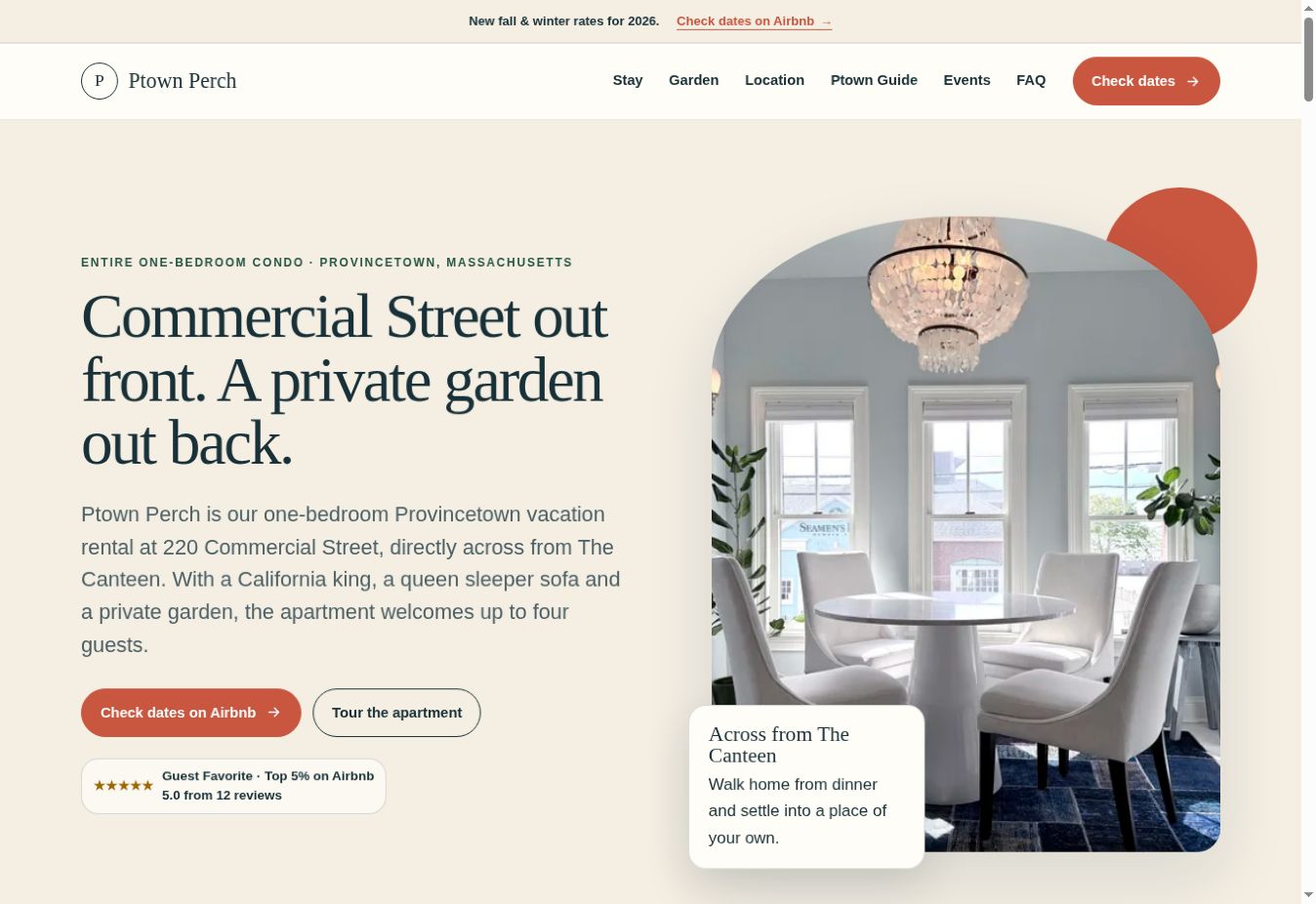
Help visitors plan and choose.
A prospective guest may start with a question about an event, a season, or getting to Provincetown. The website needs to help with that planning while making it easy to understand the apartment and decide whether it fits the trip.
I approach the site as both a local resource and a property website. The aim is to connect useful answers with relevant accommodation information, then make the move to Airbnb clear when someone is ready to check dates.
What I build and maintain
Accommodation information that helps people decide
I develop the homepage and supporting pages around the apartment, garden, location, and common guest questions. Photographs and copy explain the sleeping arrangements, amenities, stairs, and parking, alongside the features that make the property distinctive.
Local and seasonal content with a purpose
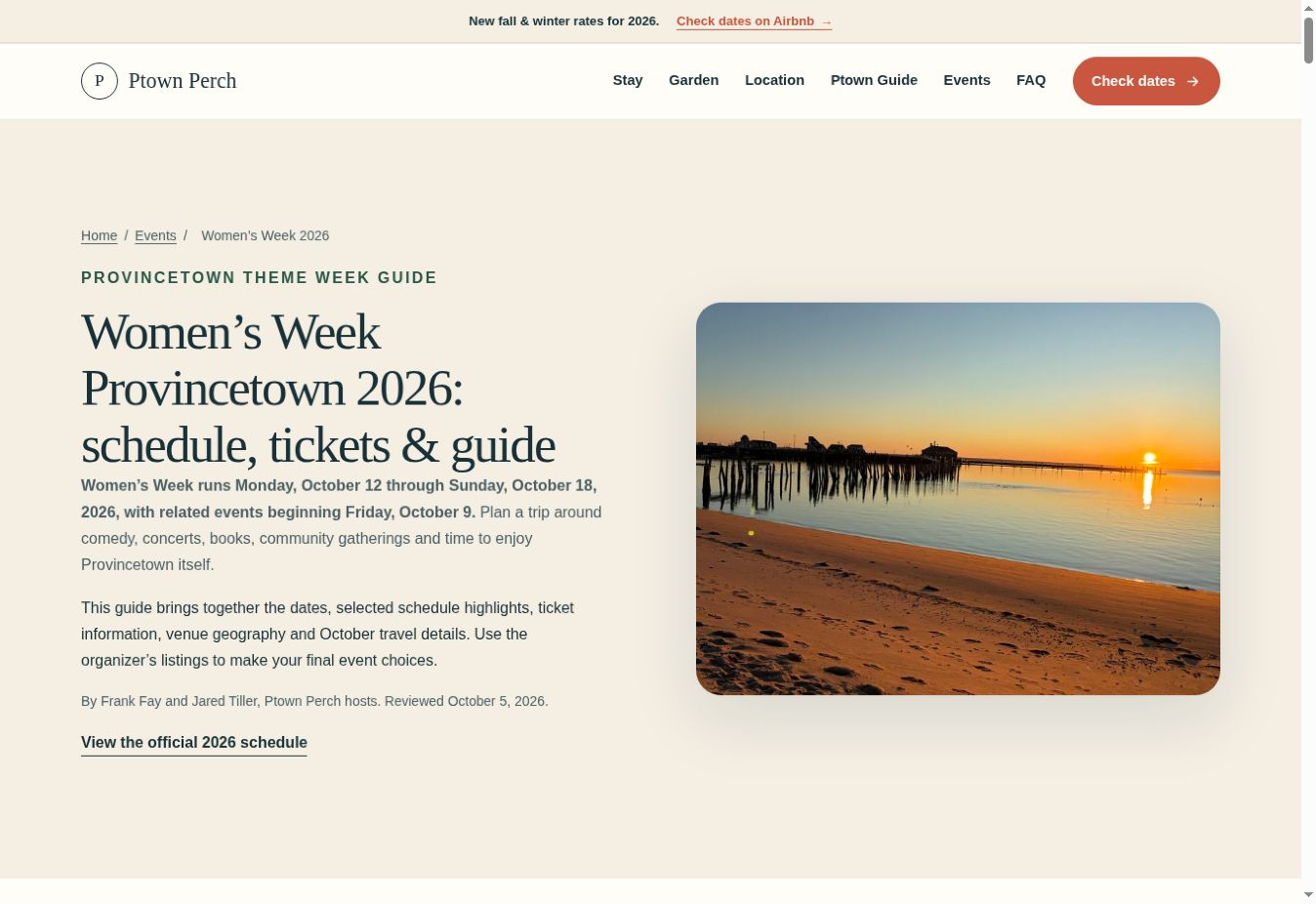
I develop guides around specific visits, including Women’s Week, Halloween, and late-fall and winter stays. The guides bring together planning information, official sources, local context, and related pages, with dates reviewed as plans and schedules change.
Search foundations and navigation
The work includes page titles, headings, internal links, FAQs, structured data, and mobile layouts. I use Search Console to see which pages are appearing in search and where additional information or clearer navigation may be useful.
Paths to a stay and a future visit
I connect guides with accommodation pages, Airbnb links, and email-signup opportunities. Where the property is unavailable for an event, the guide can still help people plan and introduce Perch for a future visit.
September 1–30, 2026
What the September data shows
A dated snapshot of search visibility and activity on the website, using Google Search Console and Google Analytics 4.
- Google Search impressions
- 7,836Times the site appeared in Google Search results.
- Google Search clicks
- 207Clicks from Google Search results to the site.
- Airbnb-link click events
- 77Recorded in GA4 across all traffic sources.
The Airbnb figure counts recorded click events, including possible repeat clicks and owner or testing activity. It does not count unique guests or completed bookings. The search and GA4 figures are separate measures, not a single tracked booking funnel.
| Guide | Impressions | Clicks |
|---|---|---|
| Women’s Week | 2,616 | 75 |
| Halloween | 1,649 | 56 |
Sources: Search Console for ptownperch.com and GA4 for Ptown Perch, retrieved October 5, 2026. Search totals use the property’s daily totals; guide figures use the page report. Airbnb activity uses the airbnb_outbound_click event.
What I take from the evidence
The guide data shows that people are reaching the site through trip-planning content. The recorded Airbnb clicks also show use of the booking links. That gives me a practical basis for reviewing which guides need attention and how they connect with the property information.
This is a snapshot of activity, not a before-and-after test. It does not establish that a particular edit caused more traffic, bookings, or revenue. Completed reservations happen on Airbnb and are not verified by these website click events.
The screenshots show the site as reviewed on October 5. They include ongoing work after the September reporting period and should not be read as the exact pages that produced the September figures.
An ongoing marketing project
The next round of work follows the same process: keep useful guides current, make the apartment’s fit and availability clear, and review search activity alongside the steps visitors take on the site. Booking outcomes need their own evidence before they become marketing claims.
Ptown Perch shows how I connect the details of a business with the content, website, and measurement work needed to support it.